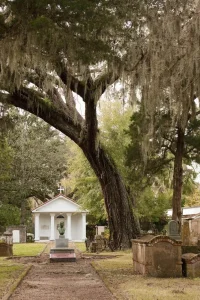
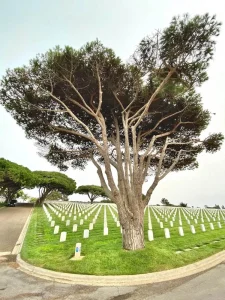
Most cemetery websites read like a parking notice. Hours, fees, a phone number, a stock photograph of an oak tree. The grounds themselves hold two hundred years of a town's history, and the site says nothing about any of it.
Storytelling in cemetery website design means using the pages to carry what the place actually is. Done with restraint, it changes how families feel about burying someone with you, and it brings in visitors who would never have searched for a plot.
Why story belongs on a cemetery site
Three groups arrive at your homepage. The bereaved family choosing a resting place, the descendant researching a name, and the local resident who walks the paths on Sundays. Price lists serve none of them well on their own.
A family comparing two cemeteries has almost nothing to judge on. Both have grass, gates and a fee schedule. The one that shows who lies there, how the grounds were laid out, and who tends them gives that family something to hold onto. Trustees consistently report warmer first phone calls after we add this material.

Four narratives worth building pages around
The founding of the ground
When was the first burial, who set the land aside and why. A single page with three photographs and 400 words of history covers it. Local newspaper archives and parish records fill the gaps if your committee's memory does not.
Notable residents
Every cemetery holds someone worth writing about. A war casualty, a shipwreck victim, a mayor, a poet, the family who ran the mill. Short profiles of six to eight people give genealogists a reason to link to you and give the local paper a reason to mention you.
The people who keep the place
Introduce the sexton, the grounds volunteers, the trustee who has served twenty years. Faces reassure families that a person, not a council department, will answer the phone.
The landscape itself
Old yews, a memorial rose garden, a section of unmarked graves from an epidemic. These give the site something to photograph across four seasons.
Where storytelling goes wrong
Restraint separates a good cemetery site from a mawkish one. Watch for these:
- Borrowed grief. Writing about loss in general terms to stir emotion reads as manipulation. Write about your ground and the people in it.
- Publishing recent burials as content. A family that buried someone last month has not consented to becoming your marketing. Stick to graves old enough to be history, and ask permission for anything else.
- Autoplay music and slideshows. Someone opens your site in a hospital corridor. Let them choose.
- Long walls of text. Six hundred words per story, subheadings, a photograph. Genealogists will scan for names before they read a line.
Structure the stories so search engines find them
Each story deserves its own page and its own URL, not a paragraph buried in an About section. Title the page with the name and the place, something like "Sergeant William Doyle, Section C, Riverdale Cemetery". Searches for individual names bring in traffic that no keyword tool will ever show you, and those visitors often turn out to be planning a family plot.
Add dates, section references and a photograph caption to each page. Link the stories to your grave search so a visitor who lands on a profile can find their own family from there.
How much does this cost you
A history page and six profiles takes a volunteer around fifteen hours to research and write. We supply the templates, the structure and the editing. Most of our clients spread the work over a winter when the grounds are quiet.
The return arrives slowly and then keeps arriving. Historical pages rarely go out of date, they collect links from genealogy forums for years, and they cost nothing to keep online.
Sitting on a hundred years of local history?We build cemetery websites that carry it properly, with copywriting and photography included in every package.